Founder and Chairperson - Fazle Hasan Abed


The adage "It is never the same after a war," has proved to be utterly true in the life of Fazle Hasan Abed, the Founder and Chairperson of BRAC, one of the largest non-government development organisations in the world. Born in 1936 in Bangladesh, Abed was educated in Dhaka and Glasgow Universities. The 1971 Liberation War of Bangladesh had a profound effect on Abed, then in his thirties, a professional accountant who was holding a senior Corporate Executive's position at Shell Oil in Chittagong. The war dramatically changed the direction of his life. In the face of the brutality and agony of war, the comforts and perks of a Corporate Executive's life ceased to have any attraction for him. As the then East Pakistan was under virtual occupation, Fazle Hasan Abed left his job and went to London to devote himself to Bangladesh's War of Independence. There, Abed helped initiate a campaign called Help Bangladesh to organise funds for the war effort and raise awareness in the world about the genocide in Bangladesh.


The war over, Abed returned to the newly independent Bangladesh to find the economy of his country in ruins. Millions of refugees, who had sought shelter in India during the war, started trekking back into the country. Their relief and rehabilitation called for urgent efforts. Abed decided to initiate his own by setting up BRAC (formerly Bangladesh Rural Advancement Committee) to rehabilitate returning refugees in a remote area in a northeastern district of Bangladesh. This work led him and his organisation BRAC into dealing with the long-term task of improving the living conditions of the rural poor. This experience strengthened Abed’s belief that the poor cannot be expected to organise themselves on their own because of economic insecurity, illiteracy and general lack of confidence. The process of social mobilisation, he felt, must be accompanied by measures to remove these handicaps. Hence, his policy was directed to help the poor develop their capacity to manage and control their own destiny. Thus Alleviation of Poverty and Empowerment of the Poor emerged as BRAC's primary objectives.


In a span of only three decades, BRAC grew to become the largest Non-Governmental Development Organisation (NGO) in the world in terms of the scale and diversity of its interventions. As BRAC grew, Abed ensured that it targeted the landless poor, particularly women in rural Bangladesh, a large percentage of whom live below the poverty line with no access to resources and to whom the fruits of conventional development do not even trickle down.


BRAC now works in more than 69 thousand villages of Bangladesh covering over an estimated 110 million poor people in the field of income generation, health care, population control, primary education for children and the like. Abed felt that in the face of the enormity of Bangladesh's problems BRAC had to think big and act on a large canvas. Thus from as early as the early eighties, BRAC worked on a national scale, for example, in reaching oral-rehydration therapy to 13 million homes in a country where diarrhea used to take tens of thousands of lives every year.


Abed looks at poverty from a holistic viewpoint. He believes that poverty has to be viewed not only in terms of insufficient income or an absence of employment opportunities but also as a complex syndrome that manifests itself in many different forms. In Abed's multidimensional poverty reduction approach, there is no single anti-poverty panacea and therefore, a range of interventions, often at large scales, comprises BRAC programmes. He also strongly believes that poverty cannot be eradicated without the reconstruction of gender role in the society. Empowerment of women is thus a precondition for sustainable poverty alleviation. Abed has been promoting a development culture with women at the forefront of all activities, be it micro-credit, health, or education. As a result, about 6 million women have so far been organised into over 180,000 groups called Village Organisations. These form the base of multifaceted programmes initiated by BRAC. The logic of these programmes is the creation of an 'enabling environment' in which the poor can participate in their own development and in improving the quality of their lives. BRAC has so far disbursed over US $ 3,900 million as micro-credit to 5 million people, mostly women, with a recovery rate of 98.7%. In 1985, BRAC’s Social Development Programme, Human Rights and Legal Services component was introduced through which women are educated about their legal rights and laws pertaining to family, marriage, and inheritance. Members also participate in a specially designed saving scheme, which provides old age financial security.


BRAC's health programme emanates from Abed's deep concern about disease and malnutrition that, he firmly believes, are major contributing factors to poverty. Brac provides preventive, curative and rehabilitative health services to the rural poor and lessons learned over the years have enabled BRAC to restructure the programme to cope with demands of national priority and policy. BRAC's Health Programme now touches the lives of about 100 million people in Bangladesh.


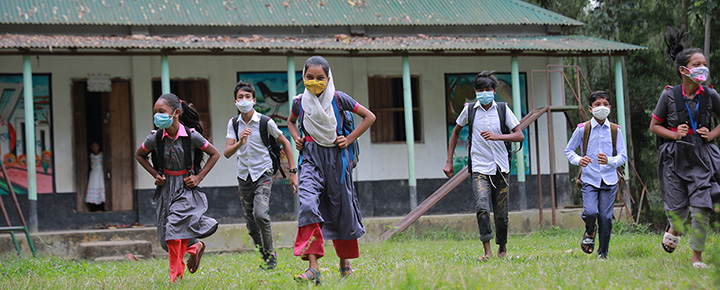
Based on his conviction that education is a basic human right and is essential to eliminate poverty, BRAC started its Non-formal Primary Education Programme in 1985 with 22 one-room room primary schools with 30 students in each school. By now over 3.7 million children from poor families have graduated from BRAC primary schools and at present over 1.5 million children, over 65% of whom are girls, are studying in the 52,000 BRAC primary and pre-primary schools spread all over Bangladesh.


Many of the innovations pioneered by BRAC in education as well as in health, poverty eradication and rural development have been replicated in many developing countries. Impact study of BRAC programmes shows a consistent improvement in the quality of life of the rural poor. There is a new-formed confidence in rural Bangladesh based on knowledge and enlightenment, and the frequently experienced conditions of famine and epidemics now have become things of the past. Responding to societal needs Abed’s recent projects include the BRAC University (BU), which was launched in April 2001. BU was set up not only to impart knowledge, but also to act as a center of excellence in knowledge creation through research that connects with practice. BRAC University has recently established the James P. Grant School of Public Health, another initiative of Abed, which aims to provide higher education of the highest quality in the field of public health by utilising local resources as a field laboratory for experiential teaching and learning. In order to strengthen the public sector, Abed has also established the Center for Governance studies at BRAC University, which offers a Masters programme in Governance and Development for mid-level civil servants.


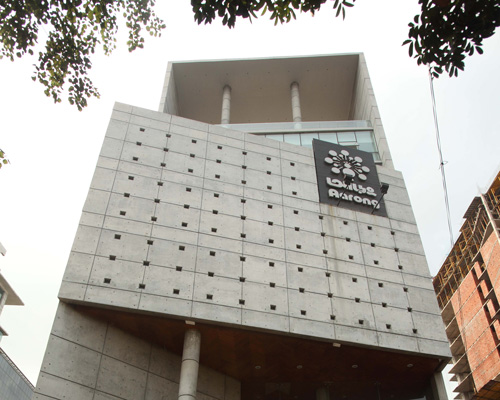
Among the commercial ventures under Abed’s vision, the BRAC Bank, inaugurated in 2001, functions as a full-fledged commercial bank. It strives to promote broad-based participation in the Bangladesh economy by increasing access to economic opportunities for all individuals and businesses with a special focus on Small & Medium Enterprises (SME). Other commercial ventures include Aarong - a retail outlet and Brac Dairy and Food Project. Where member borrowers could face market failures, BRAC juxtaposed itself in order to institute better linkages between consumers and poor rural producers. For instance Aarong, a successful brand name in Bangladesh today, markets the products of rural artisans; the BRAC Dairy was established to offer a fair price to BRAC members who had invested their loans in cows and were facing barriers at the local markets. The profits from these commercial ventures are plowed back into BRAC’s core development fund.


In 2002, BRAC went international. Abed realised that BRAC’s early experience in post-war reconstruction of Bangladesh could be put to good use in order to help a war-ravaged Afghanistan. It registered as a foreign NGO in Afghanistan to rebuild the ancient country that had sustained decades of conflict and war. Since then BRAC has expanded to 24 out of 34 provinces, modifying and designing programmes to fit the specific needs of the Afghan people. BRAC has also established the BRAC Afghanistan Bank, a full service commercial bank with a special focus on the Small and Medium Enterprise sector. In 2004 BRAC also registered as a foreign NGO in Sri Lanka to help the country back on its feet after its east coastal provinces were virtually destroyed by the devastating Tsunami.


BRAC After the successful introduction of BRAC’s international initiatives in Afghanistan and Sri Lanka, BRAC launched its development programmes in eastern Africa in June 2006. BRAC has started programmes in Tanzania and Uganda and has been registered in Southern Sudan. BRAC will introduce its unique integrated development approach for poverty reduction in these countries by incorporating health, water and sanitation components along with micro-finance schemes.


Constantly evolving, experimenting, and expanding, BRAC is a symbol of determination and dynamism. Bangladesh still suffers from poverty and disease, but BRAC remains steadfast in its commitment to help people fight back. Indeed marked improvements have also been noted in Bangladesh. The economy has grown by more than 5% a year over the last ten years, the number of people living in poverty has dropped 20%, the literacy rate has doubled, infant mortality has been cut by more than half, and life expectancy has risen by 13 years. In all of this BRAC’s contribution is undeniable.


With a strong underpinning of an orderly but decentralised system, Abed transmits values to more than 100 thousand dedicated women and men of his organisation who work tirelessly in the difficult rural environment and urban slums of Bangladesh. Firmly committed to improve the conditions of the poor, Abed and his organisation have been fighting the long, hard and sustained battle against all that afflict the impoverished millions in Bangladesh from malnutrition to child mortality, unemployment to population growth, from illiteracy to social injustice. The success of BRAC's efforts can be attributed to the very people it serves, their resilience and resourcefulness in the face of unbelievable odds. In Abed's words, “Civilisation is not of a few great individuals---it is the cumulative actions of all people together, great and small”.


Three and a half decades on, BRAC staff and members still look to Abed for more groundbreaking innovations and unique, visionary ideas and Abed is still insatiable in his thirst for “doing more.” As he has said in an interview in 2004, “If I were thirty-five now instead of sixty-eight, I would do so many other things that I haven’t done...Now at the twilight of my life, I feel that I must complete all the things that I have started.”


© 2010 BRAC - BRAC Centre, 75 Mohakhali, Dhaka 1212, Bangladesh