Following the Government of Bangladesh’s recognition of lightning as a national disaster in 2016, it has emerged as one of the country’s deadliest natural hazards, causing more fatalities each year than cyclones and floods. Between 2015 and 2024, a total of 3,485 people lost their lives due to lightning strikes.
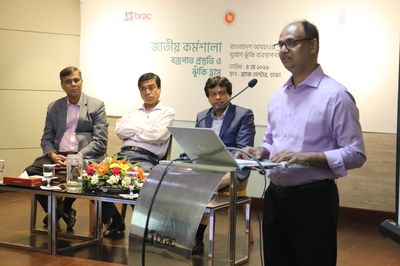
In this context, BRAC, in collaboration with the Bangladesh Meteorological Department (BMD), organised a national-level workshop titled “Lightning Preparedness and Risk Reduction in Bangladesh” on Monday, 4 May 2026, at BRAC Centre, Dhaka. The workshop reviewed ongoing initiatives to mitigate lightning risks, identified gaps and challenges, and facilitated in-depth discussions on relevant international practices and approaches.
Abu Daud Md Gulam Mustafa, Joint Secretary of the Ministry of Disaster Management and Relief, attended the event as the chief guest. The discussion session was chaired by Md Momenul Islam, Director (Current Charge) of the Bangladesh Meteorological Department (BMD). Dr Md Liakath Ali, Director of the Disaster Risk Management Programme, was also present at the event.
Abu Daud Md Gulam Mustafa observed that, given the country’s high population density, farmers, children, and women are among those most at risk of lightning-related fatalities. To reduce such deaths, he stressed the importance of installing appropriate shelters equipped with lightning arresters in high-risk areas, alongside strengthening precautionary measures and raising public awareness on early warning systems.
Md Momenul Islam commented that between 26 April and 2 May this year, 71 deaths from lightning strikes were recorded despite early warnings issued three days in advance. He explained that early warning is only effective when it leads to timely action and proper implementation, which requires collaboration at all levels. He added that reducing fatalities depends on stronger public awareness of safety measures related to lightning and thunderstorms, expressing confidence that improved awareness can help bring down the death toll.
Dr Md Liakath Ali stated that forecast information must be time-efficient and disseminated effectively across the country, ideally several hours in advance, using channels that ensure wide reach to support preparedness. He noted that the mechanism for delivery remains a key challenge and requires a collaborative effort among all stakeholders to help reduce thunderstorm-related deaths.
Dr Muhammad Abul Kalam Mallik, Meteorologist at the Storm Warning Centre of the Bangladesh Meteorological Department, provided the keynote presentation on lightning vulnerability, risk in Bangladesh lightning forecast, and early warning. Representatives from Regional Integrated Multi-Hazard Early Warning System (RIMES), UNDP, Plan International and BRAC also shared their insights and experience on current initiatives of lightning preparedness and risk reduction.
The opening remarks were provided by Khondoker Golam Tawhid, Head of BRAC’s Disaster Risk Management Programme. The event also included a panel discussion of experts that highlighted the challenges in predicting lightning and delivering early warnings to remote areas, while also identifying key action priorities to address needs on the ground.