As a Guatemalan, I did not expect to spend a month in Bangladesh with BRAC's Climate and Environment Innovation Programme. What began as an internship became an opportunity to learn the impacts of climate change on daily life. I focused on three questions: How does climate change affect children and other vulnerable groups? Does Bangladesh's National Adaptation Plan (NAP) address their needs? How do local experiences compare to national policy? Exploring these questions deepened my understanding of Bangladesh's climate vulnerability and enabled me to explain these issues to readers who may be unfamiliar with them.
Bangladesh is one of the countries most vulnerable to climate change. Across the country, communities are facing increasingly unpredictable rainfall, floods, cyclones, droughts, extreme heat, riverbank erosion, salinity and other climate hazards. These changing conditions affect access to safe water, education, healthcare, food and livelihoods.
Children are among those most affected. Disasters linked to climate change can interrupt their schooling, raise health risks, threaten their access to food, and put more pressure on their families.
Climate Adaptation Begins with People
Bangladesh has made climate adaptation a top priority. The Constitution highlights the need to protect the environment, and national plans like the National Adaptation Program of Action (NAPA), the Bangladesh Climate Change Strategy and Action Plan (BCCSAP), and the National Adaptation Plan (NAP) are designed to build resilience and support sustainable development. During my internship, I explored these questions through conversations with BRAC staff in Dhaka and a field visit to Mongla, where I met community members and heard about their experiences firsthand.
Lessons from Mongla
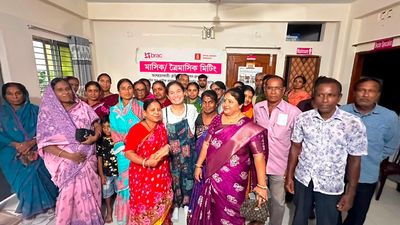
Everyone has a role to play in climate adaptation, from policymakers and organisations to the communities living with climate change every day. At first, I thought understanding climate adaptation was all about knowing policies like the National Adaptation Plan (NAP). These policies do matter, but I soon saw that communities don’t need to memorise every detail. They already understand what’s at risk because they live with it daily. The real question is how people can adapt and build resilience in a changing climate. This means facing tough questions: How will they make a living? What can they grow or sell? Where will they work if their homes or jobs are no longer secure? I saw this up close when I met with the Climate Action Group Youth to Increase Water Security in Mongla. Members talked about how climate change has changed their lives. Some shared stories of losing children to extreme weather, while others described children getting sick from waterborne diseases like cholera, dysentery, and typhoid after floods and water contamination.
Women face additional challenges. Higher salt levels in drinking water have caused reproductive health problems, like more miscarriages, preeclampsia, urinary tract infections, and other illnesses (Hossain et al.). Many women also spend hours walking long distances to collect safe water. When their daughters accompany them, they may miss schools and face increased risks of harassment and violence. It made me realise that climate adaptation is not only about national policies or technical fixes. It is really about helping people adjust their daily lives, keep their families safe, and find ways to build a future, even as climate change brings new challenges. This perspective has been shared not only by community members but also by Tausif Bhai, who works in Climate Smart Agriculture within the Climate and Environment Innovation Program (CEIP), and by Saifuddin Bhai, the Program Manager of the Climate and Innovation Program (CIP).
How BRAC Turns Local Voices into Action
So, how does BRAC ensure community needs shape its climate adaptation programs? The Climate and Environmental Innovation Program has implemented initiatives such as household and community rainwater harvesting systems, as well as solar-powered Pond Sand Filter (PSF) systems. These projects help improve water access and support farming. They also support waste management and crop storage. With offices in every district, BRAC works closely with local people to understand and meet their needs. Field visits play a vital role in maintaining this connection by helping organisations understand local contexts and adapt interventions to community needs.
Looking Ahead: Strengthening Climate Adaptation
As this programme continues to evolve, there are chances to improve it, especially as Bangladesh works on the Monitoring and Evaluation (M&E) system for the National Adaptation Plan within its broader Monitoring, Reporting, and Verification (MRV) framework. A key step is to track how adaptation efforts are making a difference in children's daily lives. Are children healthier? Can they return to school after disasters? Do they have steady access to safe drinking water and nutritious food? Using child-focused indicators can help answer these questions and give policymakers a better idea of what is effective and where more help is needed.
Sent with Gratitude from Bangladesh
As I return to California, I leave Bangladesh with a deeper understanding of what climate adaptation means in practice. My time with BRAC gave me the opportunity to see how climate change shapes everyday decisions, livelihoods and opportunities for communities living on the frontlines of climate risk.
Beyond the internship, I will remember the people I met, the communities that welcomed me, and the culture, landscapes and hospitality I experienced throughout my time in Bangladesh. I am grateful not only for the opportunity to learn about climate resilience, but also for the people who shared their experiences with me and welcomed me into their communities. Seeing the realities that communities face, from rising salinity and water insecurity to the constant threat of floods and cyclones, gave me a deeper appreciation for the strength and resilience required to adapt to a changing climate.
This experience showed me that climate adaptation isn’t only about policies or projects. It’s really about people: listening to communities, learning from them, and working with them to build a more resilient future. I’ll carry these lessons long after I leave Bangladesh.