Finance and Planning Minister Amir Khosru Mahmud Chowdhury said that a partnership-based model is being developed, which will bring the government, private sector and NGOs together to ensure the effective distribution of resources while reducing wastage and corruption. He added that the government always acts as a ‘first responder’ in any disaster, providing emergency assistance. However, in the subsequent phase, broader, long-term rehabilitation efforts, including support for education and persons with disabilities, can be addressed more effectively through the collective efforts of our partners.
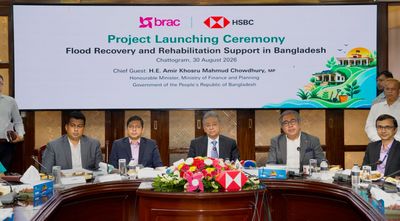
The Finance Minister made these remarks as the chief guest at the inauguration of the ‘Humanitarian Assistance and Rehabilitation Programme for Flood-Affected Households’. He formally inaugurated the programme today, Sunday, 30 August, at Chattogram Circuit House.
Finance and Planning Minister Amir Khosru Mahmud Chowdhury further said that institutions such as HSBC and BRAC are playing a vital role by stepping forward to address the remaining gaps for long-term rehabilitation, beyond government-led initiatives. This collective effort is key to ensuring successful rehabilitation.
HSBC Bangladesh has partnered with BRAC to support the rehabilitation of families affected by the recent floods in Chattogram Division. Under the partnership, BRAC will implement a seven-month rehabilitation programme with BDT 100 million in funding from HSBC. The programme will support the repair of flood-damaged homes and schools, the restoration of livelihoods and agricultural activities, and the rehabilitation of safe water and sanitation facilities.
Swarup Kumar Chowdhury, Director, Bangladesh Bank; Dr Md Ziauddin, Commissioner, Chattogram Division; Mohammad Zahidul Islam Miah, Deputy Commissioner (DC) and District Magistrate of Chattogram, were present as special guests at the event. Also present were Md Mahbub ur Rahman, Chief Executive Officer, HSBC Bangladesh and Dr Md Liakath Ali, Director of the Climate and Environmental Innovation and Disaster Risk Management Programmes at BRAC.
Md Mahbub ur Rahman, Chief Executive Officer, HSBC Bangladesh, said, ‘Our mission extends far beyond business; we have always been committed to investing in the communities where we operate. Working together with BRAC in this initiative, we are investing in resilient homes, sustainable livelihoods and essential services, aiming to assist affected families restore their lives while strengthening their resilience against future climate-related disasters.’
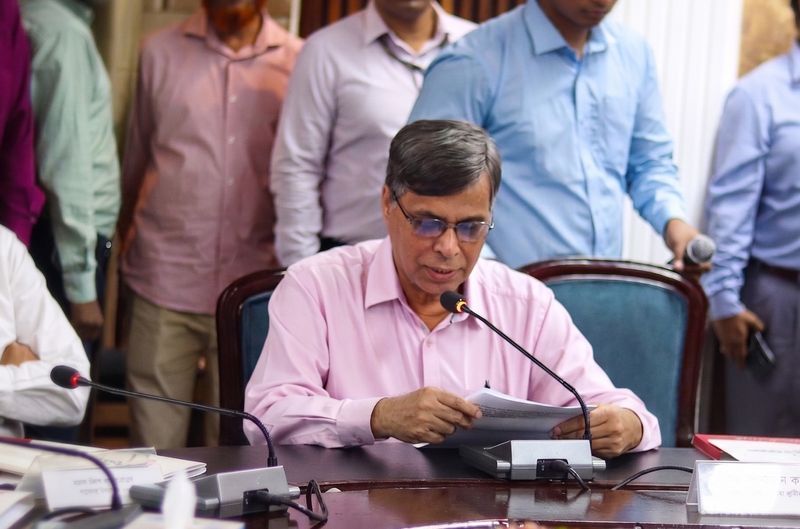
Dr Md Liakath Ali, Director of the Climate and Environmental Innovation and Disaster Risk Management Programmes at BRAC, said, ‘As always, BRAC stood beside the affected communities with immediate humanitarian assistance during this disaster. Beyond immediate relief, it is equally important to support affected families in rebuilding their lives and livelihoods while strengthening their capacity and resilience to future disasters. Through this project, we have undertaken initiatives to support flood-affected communities in the Chattogram region in restoring their homes, access to safe water and sanitation, livelihoods, and education-related infrastructure. We hope that, through the collective efforts of relevant government agencies, local administration, and communities, this project will make a significant contribution to rebuilding the lives and livelihoods of flood-affected people and help build safer, more inclusive, and disaster-resilient communities in the Chattogram region.’
Triggered by persistent heavy rainfall and upstream runoff, the recent floods caused widespread flash flooding, landslides, and prolonged waterlogging across 10 severely impacted districts, affecting more than one million people. The disaster damaged thousands of homes, schools, sanitation facilities, water sources, and agricultural lands, leaving many families in urgent need of long-term recovery support.
To help communities rebuild their lives, HSBC Bangladesh is providing financial support to BRAC to implement a seven-month recovery and rehabilitation programme. This humanitarian assistance will target the worst-affected areas, focusing on housing, WASH, livelihoods, agriculture and schools, particularly in Ward No. 38 of Chattogram City Corporation, Satkania and Banshkhali upazilas in Chattogram District, and Chakaria upazila in Cox’s Bazar District.
Under the initiative, BRAC will repair and rehabilitate 50 flood-damaged schools, distribute learning materials to students, repair and reconstruct 250 flood-damaged houses, repair and reconstruct 400 damaged household latrines, and repair and rehabilitate 30 damaged tube wells. The project will also provide livelihood restoration support to 300 of the most vulnerable households and need-based agricultural inputs to 600 of the most vulnerable farming households.
The programme will prioritise women-headed households, families with persons with disabilities, older persons, pregnant and lactating women, and other vulnerable groups. The initiative aims to support communities through long-term, climate-resilient solutions and sustainable development through impactful partnerships.