I am the mother of a beautiful 12-year-old girl, Tabassum. Her name means ‘smiling’. She is shy, but makes friends quickly. There’s just one person she is scared of.
Her father.
She has seen her father beat me up, watched me cower in a corner taking blow after blow with pieces of wood, or anything he could find to hit me with.
I was married, against my wishes, to Tabassum’s father, in my hometown of Patiya in south-eastern Bangladesh. I am the eldest child, and a woman, so I always had extra hurdles to face. My parents were conservative and all they wanted was for me to get married. They started looking for a potential husband when I became a teenager.
The marriage was agreed upon on false terms. My parents lied to his parents. They said I did not have a job and I did not want to work. This was what his parents wanted. They did not want a woman in their family to go outside for work. My parents also kept my education a secret. In reality, I was working in a small non-government organisation near my home, and used my salary to pay for my own education.
A week after my wedding, I sat for my final year college exam. My husband and his family were unhappy, to say the least.
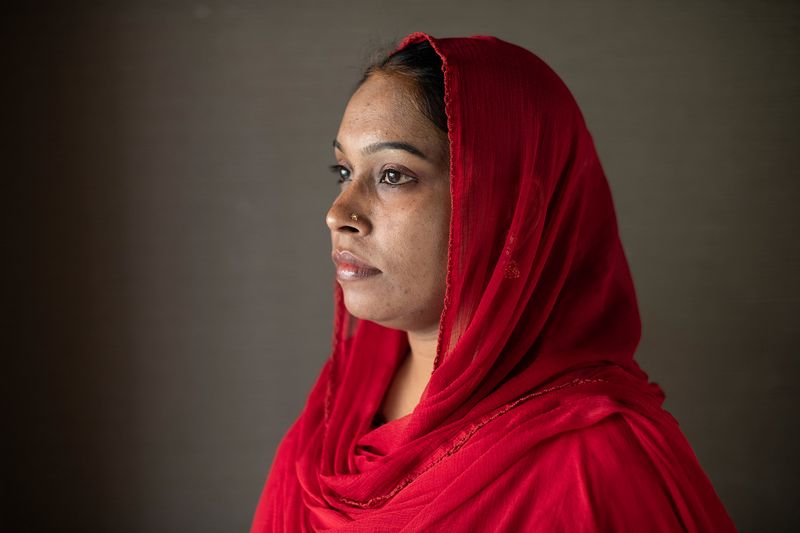
Portrait of Shahana Akter. © BRAC
I had a hard time in my husband’s house. Soon after our marriage, my in-laws stole my wedding jewellery from my cabinet to pay for my sister-in-law’s dowry. The jewellery, worth BDT 250,000 (USD 2,900), was given to me by my father and was the only asset I possessed. Giving daughters jewellery when they are married is a common form of financial security in Bangladesh.
My husband was a heavy drinker, and abusive. He hit me frequently. He had lied to my parents too, telling them he was a professional bus driver. In reality, he was a helper on a bus, a job from which he later got fired. He forced me to hand over my entire salary to him every month, despite never supporting my work, and would threaten to lock me in my room if I didn't do it. He used my hard-earned salary - which once paid for my education - to buy more alcohol.
There was always pressure on me to have a child. There was some happiness when I first conceived, but it was made clear that there would be repercussions if the baby was a girl - which of course I had no control over. Then I was asked to give birth at home, without any professional support. I was terrified. I knew it would be risky for both the baby and me, given the remoteness of where we lived - and complications are common and deadly.
I ran away and rented a small place near my office using the little savings I had kept hidden. It was 20 kilometres from my in-laws. I hid there, alone, so no one could harm me and the child in my womb.
I didn’t notify my parents. If they knew I ran away, it would cause more chaos. Even after all he’d done, which they knew about, it was still important to them that I had a husband. I contacted a woman I knew on the morning of my delivery and went with her to the hospital.
We welcomed the new life together - a beautiful daughter, Tabassum. I knew I had made the right decision when I looked at her, safe in my arms in our hospital bed. I knew neither of us would likely be alive if I had stayed with my husband.
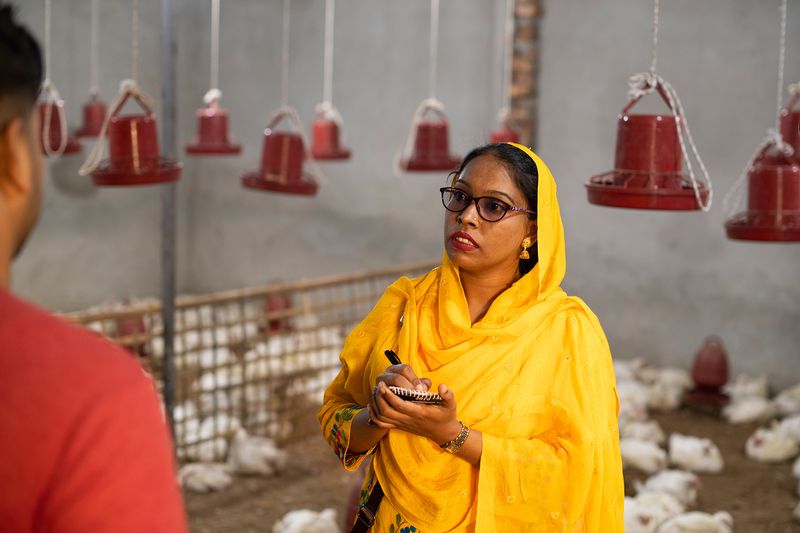
Shahana Akter during one of her field visits. © BRAC
A few days later I restarted work, and took my daughter everywhere with me, from one village to the next. When the project I was involved in ended, I moved to Chattogram, a city in southern Bangladesh, to apply for a job at BRAC.
I got the job I wanted, and it became the pillar of my existence for the next 11 years.
Work started at 8am and I often did overtime, finishing at 8pm, or later. It was exhausting, but I loved it.
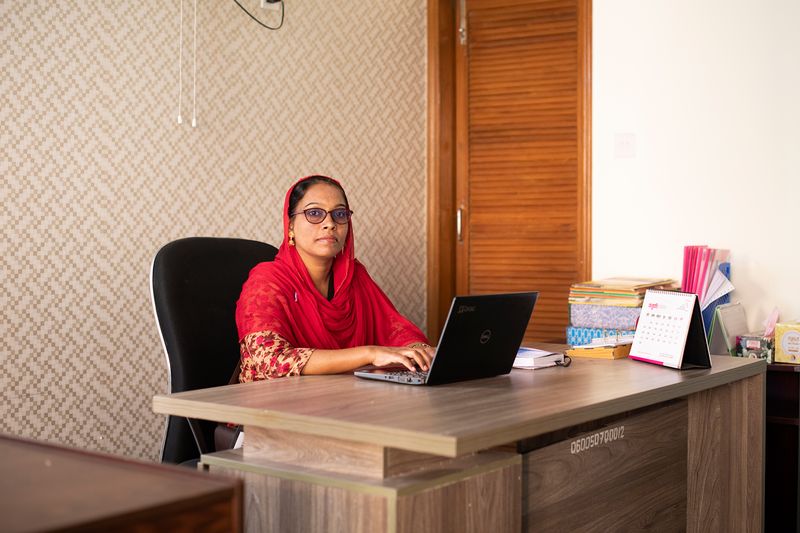
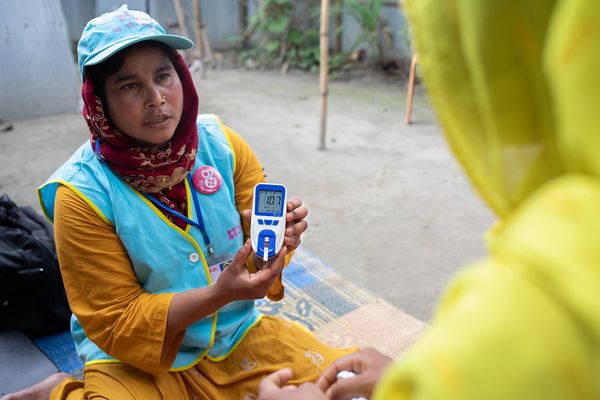
Shahana Akter at her work place. © BRAC
My life gained a little stability. Half my salary went to pay for house rent, in a little house made of tin that we shared with another family, but Tabassum and I were happy and safe.
Then Tabassum’s father reappeared.
He had been accused of raping a girl with a mental disability. He found where I was living and came to hide at my house. I couldn’t turn him away immediately, as I feared how he would react, and, as a single mother living with her daughter, the judgement I’d face from the people around me.
The abuse resumed, even in the shared house. This time, Tabassum witnessed everything firsthand. I warned him that I would call the police if he didn’t leave. It worked - but we were still afraid.
I ran back to my parents’ home in a desperate attempt to be safer. When I reached their house, they told me he had been there as well. My father, still desperate to save his daughter’s marriage, had even given him some money to fight the case in court. When he saw my husband’s name listed on the charge sheet at the police station, he finally realised what was happening. With his understanding, I was finally able to be free of the marriage.
I dived back into my work, and thrived. I got promoted as manager at my office. I received the highest form of honour in BRAC - the BRAC Values Award - and that too from Abed bhai himself. It was such a proud moment.

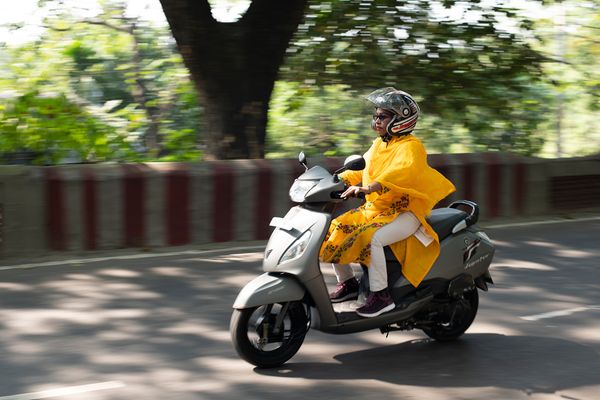
Shahana Akter posing with her motorcycle which she rides to travel to remote villages. © BRAC
For years, it was impossible to imagine having a stable life. That is gone now. I married again and I am living happily with my current husband now. Tabassum sometimes argues with him, which I think is natural, but they mostly get along. I have a son too, Nasif. When I see him and Tabassum laughing and playing together, my heart is filled with pure joy.
My parents still have reservations about how I live my life - I hop on my motorcycle, drive down the great bridge over the Karnaphuli river, travelling to remote villages and sometimes coming home late in the evenings. I think I will always have to gently reassure them that I should decide how my life should go.
It hasn’t been an easy road, but I don’t live in fear of my ex-husband anymore. The best feeling is knowing with certainty that as long as I truly believe in myself, I can come out from the most difficult times of my life with courage and dignity.
Shahana Akter is a manager of BRAC’s microfinance programme.