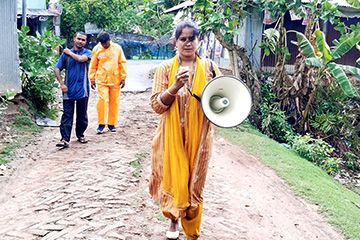
2 million people in direct line of storm; 900,000 already in cyclone shelters; BRAC mobilises 14,000 staff and volunteers
UPDATE [10:36 BST (GMT 6) 27 May 2024]
- 7 people have died in Barishal, Satkhira, Patuakhali, Bhola and Chattogram
- There is a strong likelihood of significant damage to houses, agricultural crops and infrastructure.
- Millions are without power as authorities shut down electricity supply to many areas in advance to avoid accidents, and fallen trees and broken lines disrupted supply.
- The river embankments in the Sunderbans delta, the largest mangrove forest in the world, shared by India and Bangladesh, suffered heavy damage with high tides breaching protective embankments at many places.
- There is severe flooding in many districts, and continuing heavy rainfall may also lead to flooding in the capital Dhaka.
- While the cyclone hit at midnight, impacts still being felt, hampering a full assessment of loss and damage
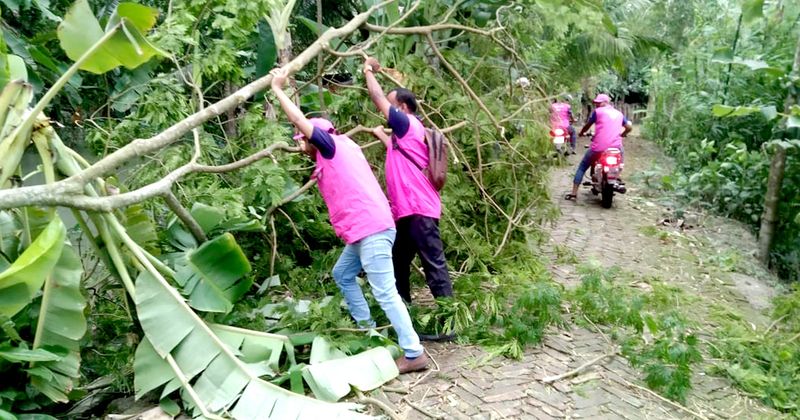
DHAKA, 26 May 2024 - BRAC teams are mobilised ahead of Cyclone Remal, predicted to make landfall in Bangladesh at midnight (local time) on 26 May. Half a million people living in makeshift shelters are at risk of displacement. Approximately 900,000 people have already taken shelter in 9,000 cyclone shelters. The cyclone is predicted to cause an 8-12-foot storm surge across 16 coastal districts. Behind it, forecasters predict 48 hours of heavy rain. Tidal surges broke through the embankments protecting more than 30 villages in Patuakhali, a coastal district in southern Bangladesh, and flooded the communities. There is a risk of landslides in Chattogram and Cox’s Bazar.
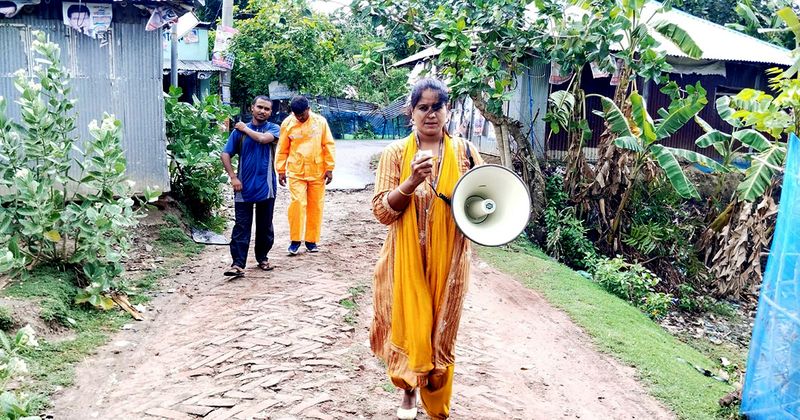
BRAC teams activated
Founded in Bangladesh 52 years ago, BRAC has mobilised thousands of its employees. BRAC staff are helping communities prepare across the impacted regions:
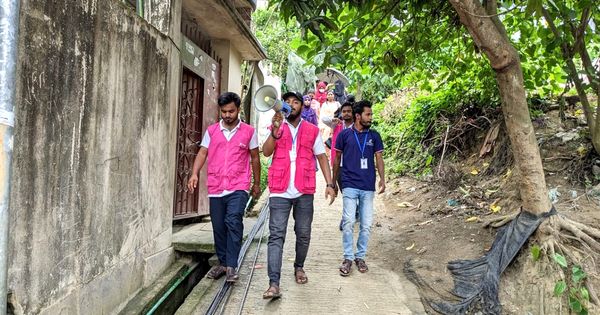
- 14,000 BRAC field staff and volunteers are disseminating awareness messages through door-to-door visits, and supporting families in vulnerable conditions to evacuate.
- BRAC community health workers and volunteers are supporting pregnant and lactating mothers in their communities.
- Community radio stations are broadcasting early warning directives.
- BRAC local offices are coordinating with local government offices in each district to distribute emergency food and water during and after the storm.
- Five of BRAC’s mobile reverse osmosis water treatment plants in three salinity-prone southwestern districts are ready to provide emergency water support.
Dr Md Liakath Ali, Director, Climate Change Programme, Urban Development Programme, and Disaster Risk Management Programme, BRAC said to CNN, “severe Cyclonic Storm Remal is headed straight for two million people, at least half a million of whom live in houses made of materials such as clay, wood, plastic sheets, straw or tin”.
The Government of Bangladesh and non-governmental organisations have mobilised trained volunteers, stocked cyclone shelters with dry food supplies, and mobilised medical teams. Rohingya communities living in the camps in Cox’s Bazar are especially at risk of landslides and floods as their shelters are made from tarpaulin and bamboo frames. The Relief and Repatriation Commissioner office has reported that schools, mosques, and madrasas within the camps have been prepared as shelters.
The maritime ports of Mongla and Payra have been advised to hoist Great Danger Signal Number 10 - the second highest danger signal, and the maritime ports of Chattogram and Cox's Bazar have been advised to hoist Great Danger Signal Number 9.
A trawler carrying at least 80 passengers capsized crossing the Mongla river this morning. Two people, including a child, are still missing. All trawler movements have been stopped following the incident.