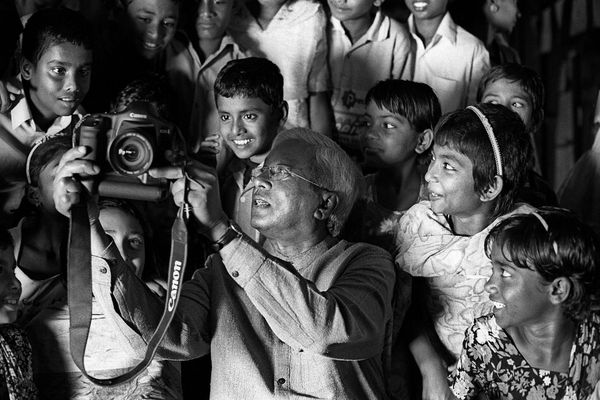
Sir Fazle Hasan Abed, or Abed bhai (brother) as many called him, was born in 1936 in Bangladesh.
He studied in London, and went on to work as a senior corporate executive at Pakistan Shell. Then, in 1970, a devastating cyclone claimed half a million lives in Bangladesh. He travelled with friends and colleagues to one of the worst-hit regions to distribute relief, and it marked a shift in his life.
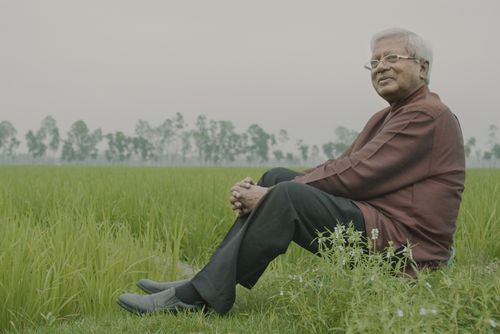
The death and devastation that I saw happening in my country made my life as an executive in an oil company seem inconsequential and meaningless.”
Sir Fazle Hasan Abed
Founder, BRAC
A year later, the 1971 Liberation War in Bangladesh dramatically accelerated that shift. Abed bhai left his job and moved to London, where he helped initiate two civil society organisations to support Bangladesh’s liberation.
Early in 1972, when the war was over, he returned to the newly-independent Bangladesh, finding it in ruins. The return of 10 million refugees who had sought shelter in India during the war spurred urgent relief and rehabilitation efforts.
Abed bhai established BRAC to address the needs of refugees in a remote area of northeastern Bangladesh, guided by a desire to help them develop their own capacity to better manage their lives.
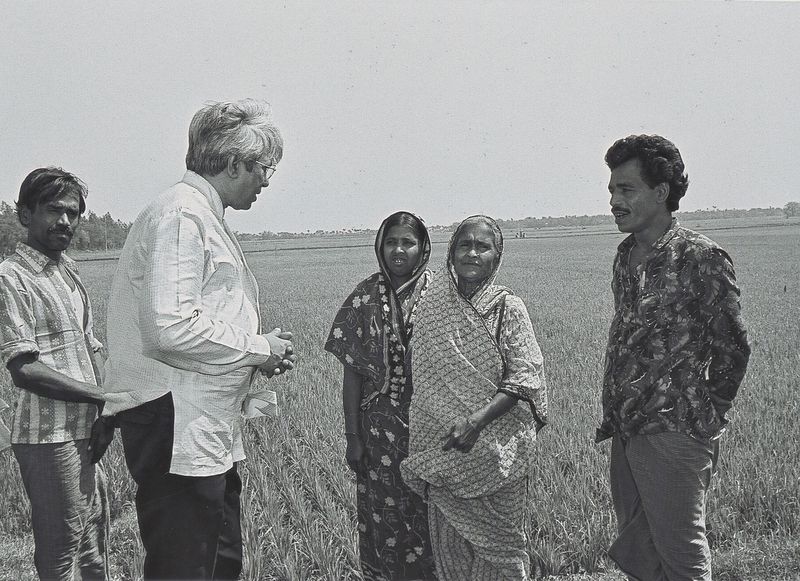
Abed bhai went on to dedicate his life to eradicating poverty and inequality. A legacy defined by bold vision and profound impact, he embodied, in the words of Nobel laureate Amartya Sen, the rare ability to combine “clear-headed thinking with sure-footed execution.” Driven by an absolute conviction in the power of people living in poverty to change their own lives, he saw development as unlocking potential through the right resources, opportunities, and, most importantly, hope. Central to his philosophy and life’s work was his unwavering belief that poverty and deprivation could only end by putting women in charge of their own lives and destinies. “I have met many defeated men,” he often said, “but I have never met a defeated woman.”
A true intellectual, with an equal love of Shakespeare’s sonnets and Tagore’s poems, he often recited poetry. He could recall poems of over 100 lines by heart, and often entranced staff with powerful, impromptu recitations. He was fascinated by books, art and culture, and quietly financially supported many social and cultural initiatives in Bangladesh, including literary festivals, the early films of Tareque Masud and other budding artists. He often expressed the aim of development as not just providing people with the opportunity to access basic human rights, but as providing everyone with the opportunity to enjoy art and literature. He undertook many literature-related projects, such as abridging almost 40 classic Bangla literary works for people with limited literacy, and then creating a system of community libraries, including mobile libraries on rickshaws and boats, to get books to every door.
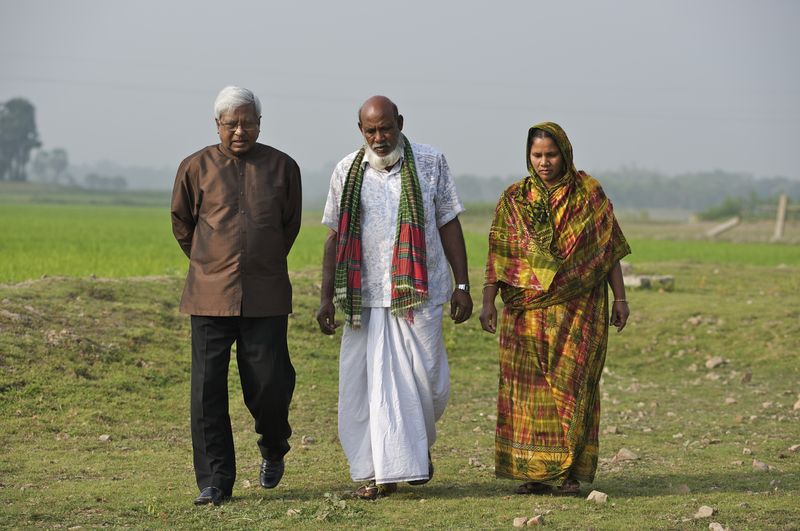
Abed bhai used the analytical rigour of a chartered accountant and the compassion of a humanitarian to approach the world’s toughest challenges with boldness, pragmatism and an unwavering belief in people and communities. He believed visionary ideas must be matched with grounded, practical solutions—shaped by the complex realities on the ground. An unconventional thinker, Sir Fazle recognised the power of blending business acumen with development practice, always seeking simple, cost-effective solutions designed to scale beyond hundreds or thousands, reaching millions. His work connected solutions across sectors, building stronger systems and transforming lives at scale. With his leadership, BRAC grew from a relief effort into a pioneering force in global development. “Small is beautiful, scale is necessary,” he often reminded BRAC, urging the organisation to think big and bold.
The inspiring legacy of Sir Fazle Hasan Abed
Early life and education
Sir Fazle was born in 1936, in Bangladesh. He studied Accountancy in London, qualifying as a Cost Management Accountant in 1962. While he was working as a senior corporate executive at Pakistan Shell, the 1970 cyclone and 1971 Liberation War in Bangladesh dramatically changed the direction of his life. He left his job and moved to London, where he helped initiate Action Bangladesh and HELP Bangladesh in support of the Liberation War.
Founding BRAC after the Liberation War
Early in 1972, after the war, he returned to the newly-independent Bangladesh. The economy was in ruins, and the return of 10 million refugees who had taken shelter in India during the war called for urgent relief and rehabilitation. Sir Fazle established BRAC in a remote area of northeastern Bangladesh, guided by his belief that lasting change must empower people experiencing poverty to take charge of their own lives.
BRAC’s global reach and impact
Today, BRAC is one of the largest NGOs in the world, operating across Africa and Asia. Its primary objectives are to alleviate poverty and empower people experiencing poverty. In 2025, BRAC was again ranked first among the world’s top 200 social good organisations by Geneva-based ‘thedotgood’ in terms of impact, innovation and sustainability.
Awards and global recognition
Sir Fazle has been honored with numerous national and international awards for his achievements in leading BRAC, including the Yidan Prize for Education Development, LEGO Prize, World Food Prize, Inaugural WISE Prize for Education, Inaugural Clinton Global Citizen Award, Gates Award for Global Health, and more.
He is also recognised by Ashoka as one of the ‘global greats’ and is a founding member of its prestigious Global Academy for Social Entrepreneurship. In 2009, he was appointed Knight Commander of the Most Distinguished Order of St. Michael and St. George by the British Crown in recognition of his services to reducing poverty in Bangladesh and internationally. Sir Fazle was a member of the Group of Eminent Persons appointed by the UN Secretary-General in 2010 to advise on support for the Least Developed Countries. In both 2014 and 2017, he was named in Fortune Magazine’s List of the World’s 50 Greatest Leaders.
Some of the world’s most prestigious universities have also awarded honorary degrees to Sir Fazle Hasan Abed, including Princeton University (2014), University of Oxford (2009), Columbia University (2008), and Yale University (2007).
Remembering Abed bhai
-
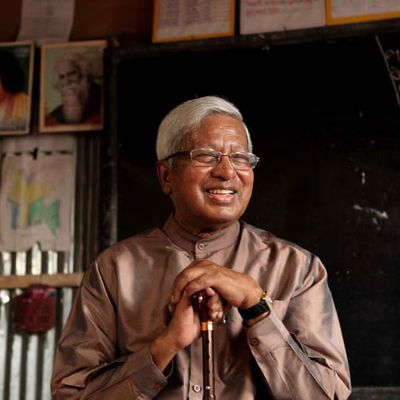
Fazle Hasan Abed a life fulfilled
Sir Fazle Hasan Abed: A life fulfilled | The Daily Star
Each step Abed took was original and daring. He did not merely adopt tried-and-tested methods; he invented new pathways. -Rehman Sobhan
-
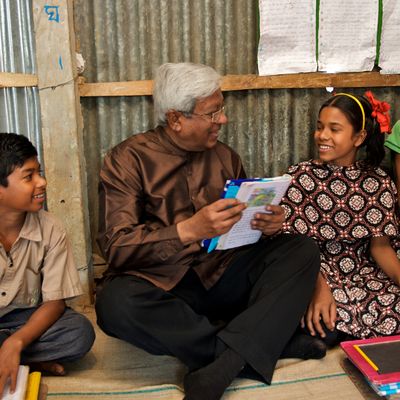
Fighting poverty with hope
Lessons from the life of Fazle Hasan Abed
Many BRAC programs—and, increasingly, other evidence-based interventions—rely on boosting people’s confidence and vision for the future to help them navigate a path out of poverty. -Scott MacMillan
-
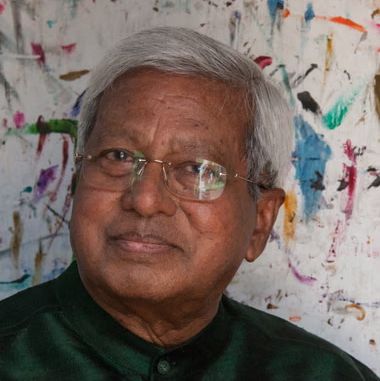
Fazle Hasan Abed: The man who lifted millions out of poverty
Founder of Brac, one of the world’s largest non-profit development organisations, which began its work in Bangladesh
I have met many defeated men in my life. I have never met a defeated woman. -Sir Fazle Hasan Abed